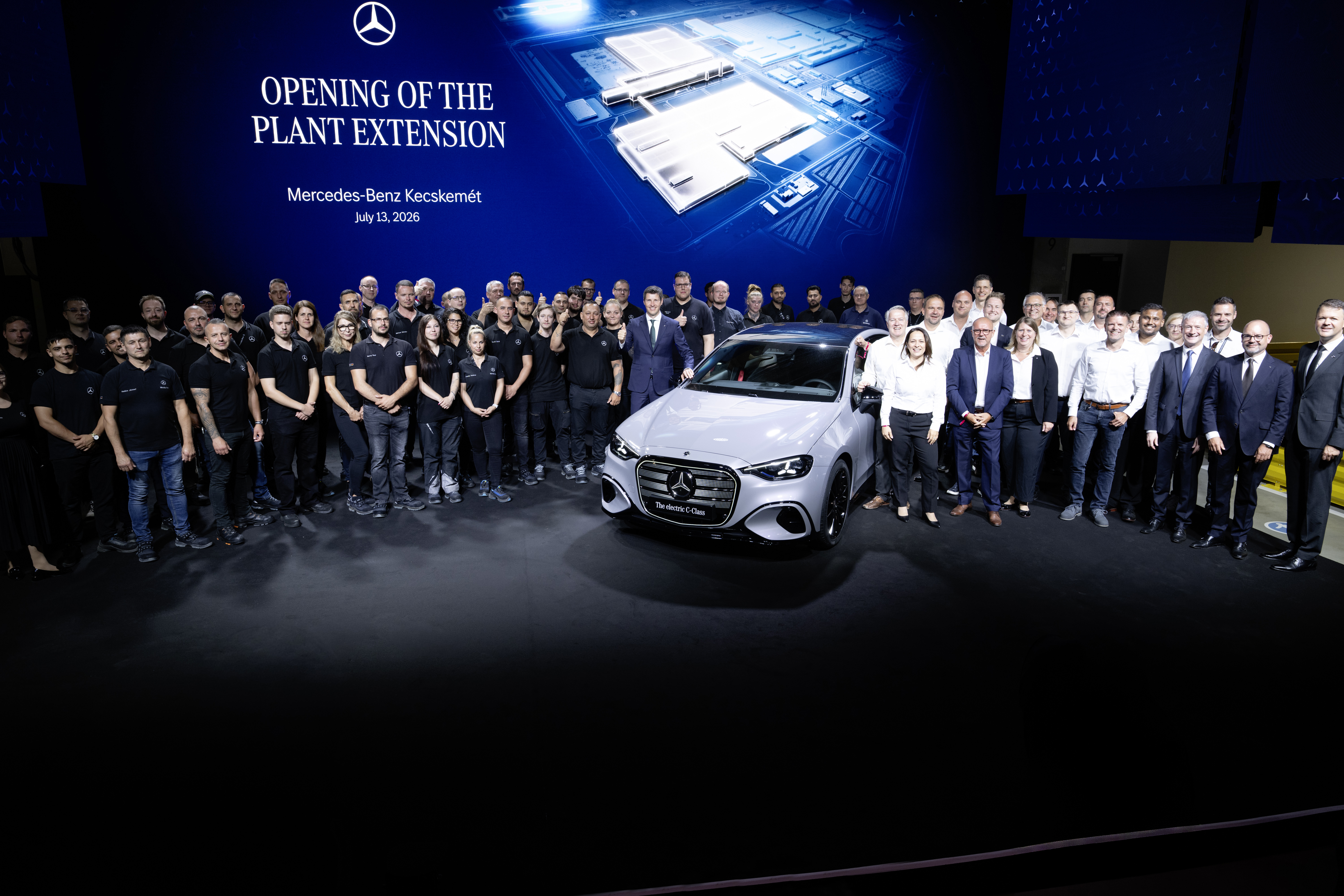
Mercedes-Benz inaugurates expanded Kecskemét plant and launches series production of the all-new electric C-Class
Mercedes-Benz has reached another major milestone in its Hungarian operations with the inauguration of its expanded Kecskemét plant and the start of series production of the all-new electric C-Class. Thanks to an investment of around €1 billion, the site has expanded from 200 to 440 hectares, becoming one of the largest and most advanced production facilities in the company's global manufacturing network.
The expansion included the construction of two new body and assembly shops, a second press shop, a new state-of-the-art surface treatment facility and a battery assembly plant. These investments enhance the plant's flexibility, digitalisation and production efficiency while supporting Mercedes-Benz's global electrification strategy.
The start of series production of the all-new electric C-Class marks the first time that a fully electric Core model has been manufactured in Kecskemét. Key components, including body parts and high-voltage batteries, are produced on site, creating shorter supply chains and increasing manufacturing flexibility.
The newly built production hall has been designed exclusively for fully electric vehicles, while the existing assembly plant continues to manufacture both electric and combustion-engine models on the same production lines. In the future, production of the electric GLC will be shared flexibly between the Bremen and Kecskemét plants according to market demand, while the compact version of the G-Class will be produced exclusively in Kecskemét.
The Kecskemét plant is among the most advanced production sites in the Mercedes-Benz manufacturing network. The MO360 digital production ecosystem, Digital Factory Twin technology and AI-based applications support production processes and quality assurance throughout the plant.
The site is powered in part by a solar installation with a total capacity of more than 42 MWp, covering around one quarter of its annual electricity demand. The new surface treatment facility also reduces energy consumption by around 20% and CO₂ emissions by approximately 80% compared with the previous technology.